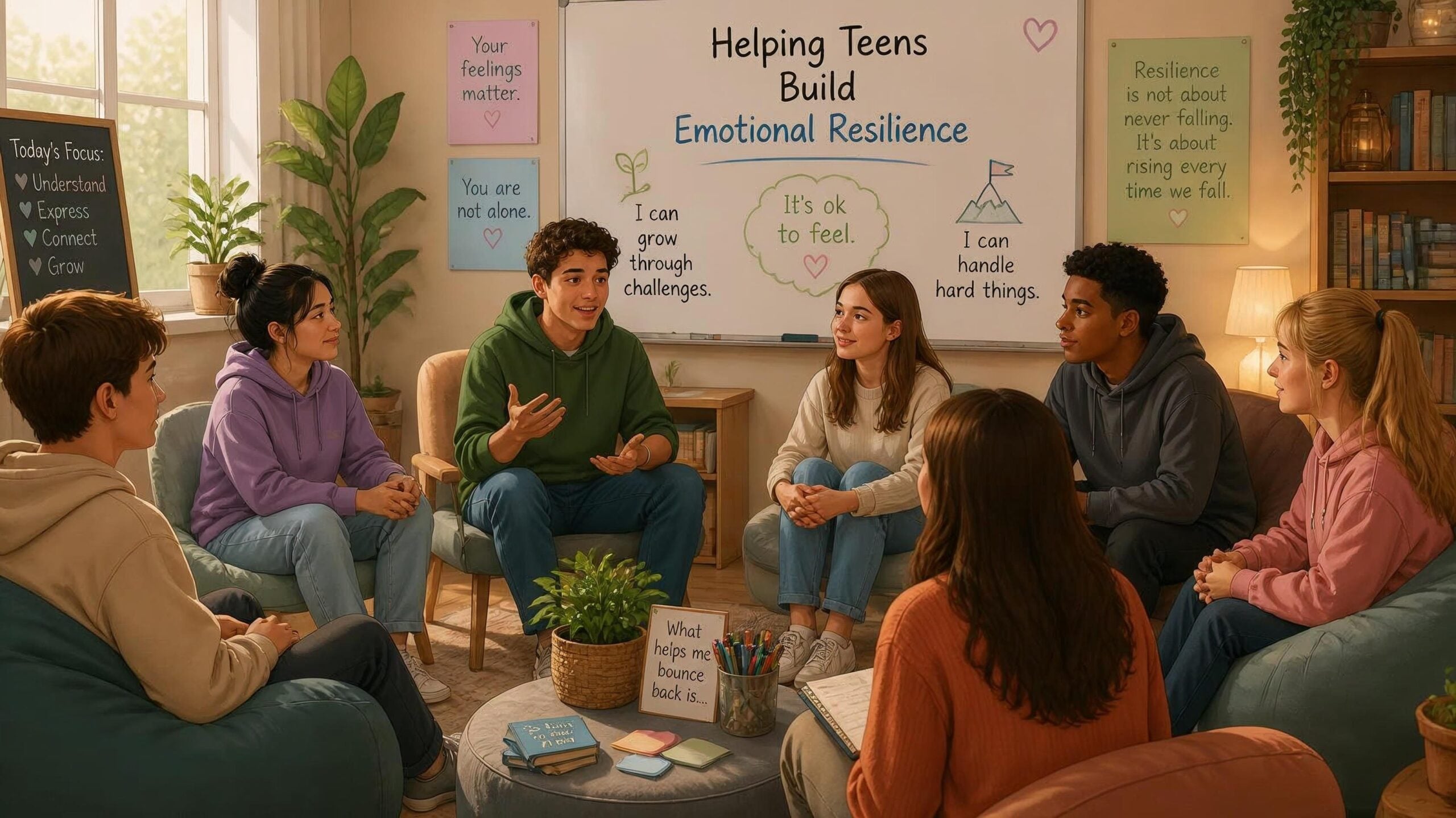

As a parent or caregiver, it’s only natural to want to protect your child from disappointment, failure, heartbreak, and stress. While you can’t prevent every difficult emotion, you can help your child build the skills to move through those moments with confidence, flexibility, and self-compassion. That’s what emotional resilience is all about.
I like to think of emotional resilience as the protective layer your child builds over time. It helps keep the little things from becoming big things. It doesn’t mean your child will never feel anxious, frustrated, disappointed, or sad. Instead, it means they learn that emotions can be understood, managed, and moved through.
More importantly, it means both you and your child can trust that even when emotions feel overwhelming, they won’t last forever.
Like any important life skill, emotional resilience isn’t something children are simply born with. It’s something they learn, practice, and strengthen throughout life. One of the biggest building blocks of emotional resilience is emotional regulation.
Emotional Regulation: Your Child’s Emotional Routine Maintenance
Think of emotional regulation like taking care of a car. Routine maintenance such as filling the gas tank, changing the oil, and rotating the tires doesn’t guarantee you’ll never get a flat tire, but it makes it much less likely that you’ll end up stranded on the side of the road.
Emotional regulation works much the same way. It’s your child’s emotional routine maintenance.
Getting enough sleep, eating a balanced diet, moving their body regularly, spending time with supportive people, and making room for enjoyable activities all strengthen emotional resilience. These habits don’t eliminate stressful moments, but they make it less likely that every bump in the road turns into an emotional crisis.
Of course, difficult days will still happen. That’s where coping skills become important. They help your child navigate overwhelming moments while continuing to build a life that supports their overall emotional well-being.
The Foundation: Nutrition, Movement, and Sleep
Many of the strongest contributors to emotional resilience are probably things you’ve heard about before: balanced nutrition, regular movement, and quality sleep. The key word is balance.
Balanced Nutrition
A balanced diet doesn’t mean never eating cookies or stopping for fast food. It means teaching your child that all foods can fit into a healthy lifestyle.
Your child can enjoy dessert without guilt while also making nourishing foods a regular part of life. Food doesn’t need to become something that’s earned or something that causes shame. Instead, it becomes one of the many ways you teach your child to care for their body.
Movement That Feels Good
The same idea applies to movement. Exercise shouldn’t feel like punishment or something your child has to do because of what they ate.
Encourage your child to discover activities they genuinely enjoy. Maybe it’s soccer, dance, swimming, hiking, martial arts, or simply taking a walk together after dinner. When movement is enjoyable, it’s much more likely to become a lifelong habit that supports both physical and emotional well-being.
The Importance of Sleep
Sleep deserves just as much attention. If you’ve ever stayed up too late, you probably know how much harder it is to stay patient, think clearly, and regulate your emotions the next day.
Helping your child build healthy sleep habits is one of the simplest ways to strengthen emotional resilience before stressful moments even happen.
Using the DBT ABCs to Build Emotional Regulation
Beyond these everyday habits, there is another framework that can help strengthen emotional regulation. In Dialectical Behavior Therapy (DBT), one of the foundational emotional regulation skill sets is called the ABCs.
A: Accumulate Positive Emotions
Make sure your child has opportunities to experience joy every day.
Whether it’s drawing, reading, baking, playing outside, listening to music, building with Legos, or spending time with friends, those moments matter. Positive emotions aren’t something your child has to earn after finishing every responsibility. They help build emotional resilience in the first place.
B: Build Mastery
One of the greatest confidence builders for children is learning they can do hard things.
Building mastery means encouraging your child to challenge themselves and value effort instead of focusing only on the outcome.
Maybe they didn’t make the team but practiced consistently. Maybe they struggled through a difficult assignment but refused to give up. Every challenge your child works through helps build confidence for the next one.
One of the greatest gifts you can give is praising effort, persistence, and courage, not just success.
C: Cope Ahead
Life naturally comes with stressful moments. Big tests, first days of school, doctor’s appointments, performances, difficult conversations, and disappointments are all part of growing up.
Instead of waiting until your child feels overwhelmed, help them prepare ahead of time. Ask questions like:
- “What do you think might feel hard about tomorrow?”
- “What could help if you start feeling nervous?”
Practice coping strategies together before the event happens. Having a plan ahead of time can make stressful situations feel much more manageable.
Your Child Is Learning From You, Too
Finally, remember that one of the greatest teachers your child has is you.
Every time you apologize after losing your patience, take a few deep breaths when you’re overwhelmed, ask for help when you need it, laugh at your mistakes, or speak kindly to yourself, you’re modeling emotional resilience in real time.
Your child is learning far more from what you do than from what you say.
Your child doesn’t need a perfect parent. They need someone who shows them that emotions are safe to experience, mistakes are opportunities to learn, and taking care of yourself is just as important as taking care of others.
Resilience Doesn’t Mean Never Struggling
Building emotional resilience isn’t about raising children who never struggle. It’s about helping your child trust that when life becomes difficult, they have the tools, support, and confidence to move through it.
You won’t always be able to remove every obstacle from your child’s path, but you can help your child build the resilience to face those obstacles with courage, self-compassion, and confidence.
That may be one of the greatest gifts you’ll ever give them.
Parents Deserve Emotional Resilience, Too
And don’t forget, you deserve emotional resilience, too.
The same skills that help your child navigate life’s challenges can help you navigate your own. Prioritizing sleep, moving your body, making time for joy, practicing self-compassion, and preparing for stressful moments aren’t just parenting tools. They’re lifelong skills that support emotional well-being at every age.
Every conversation, every bedtime routine, every encouraging word, and every moment of connection is another opportunity to help your child build emotional resilience.
Along the way, you may find yourself building a little more of your own, too. Are you ready to learn more and start your child or you in therapy today – click here!