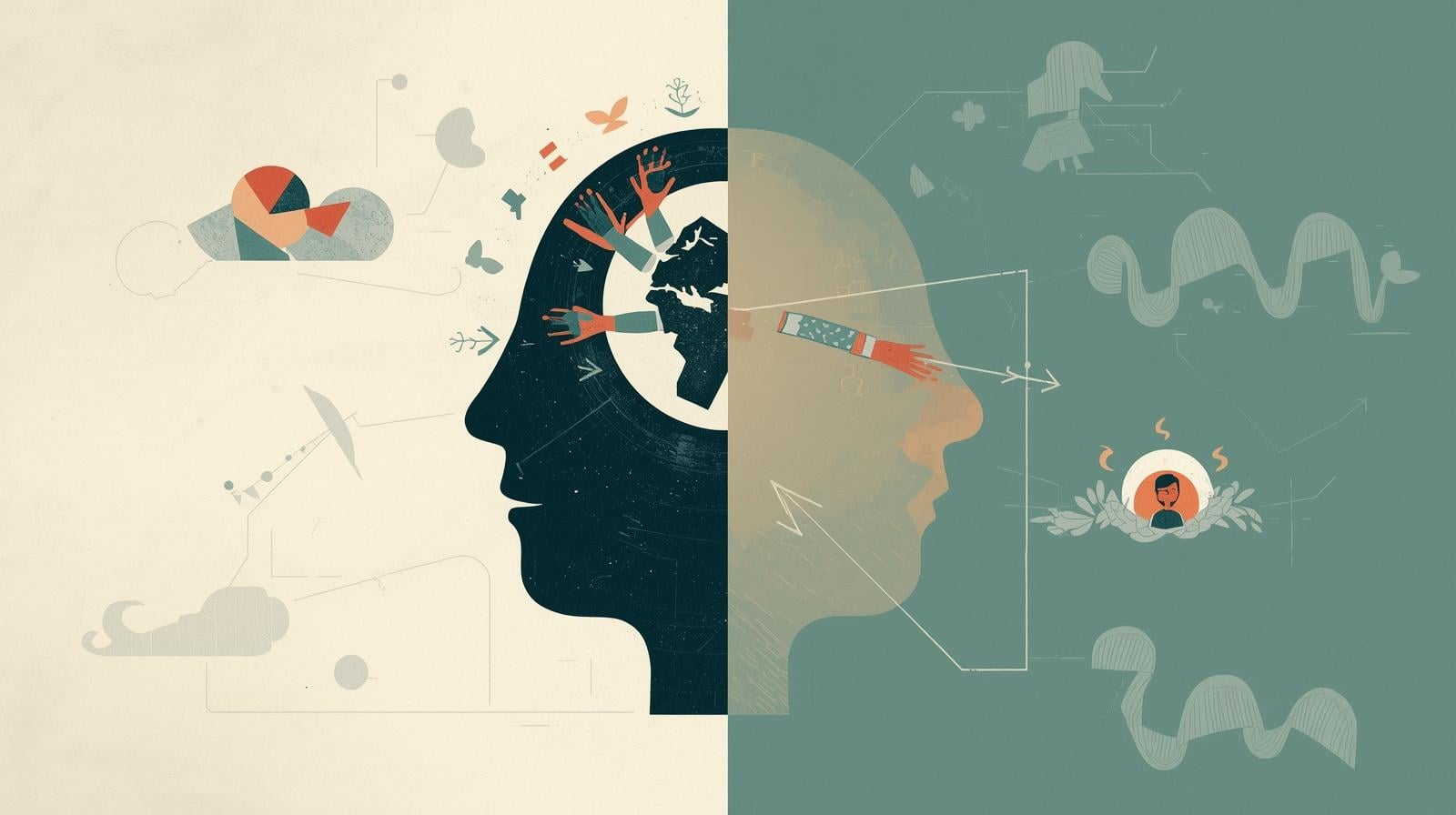

Our brains and bodies are truly incredible. They function in ways we still don’t fully understand, and maybe never will. Sometimes, this “incredible” functioning shows up in ways we love. It might look like recalling exact lines from a book you read years ago or reciting scenes from The Office by heart (if you’re anything like me). Other times, this same remarkable system shows up in ways that feel confusing, overwhelming, or even distressing.
Our brains are constantly taking in, organizing, and storing information. But not everything we experience gets processed smoothly. When something especially stressful, scary, or traumatic happens, it can disrupt the brain’s natural ability to process that experience. Instead of being integrated and stored as a past event, the memory can become what therapists often call state-dependent. This means it remains stored in the same form it was experienced, along with the original thoughts, emotions, body sensations, sounds, and even smells.
This is why seemingly unrelated things can trigger strong reactions. For example, if someone was in a car accident outside of a bakery, they might notice their heart racing every time they smell fresh bread, even if they don’t consciously connect the two. The same powerful system that helps us remember and learn can also, at times, keep us stuck in patterns of distress.
How Trauma Shows Up in the Body
Trauma often shows up in ways we don’t expect or don’t immediately recognize. It might look like your heart pounding in the middle of a random Tuesday afternoon or a persistent feeling that you can’t quite catch your breath. Trauma is not just something we think about. It is something we feel, physically and emotionally. You may have heard the phrase “The Body Keeps the Score,” and while it is the title of a popular book, it also captures a very real experience.
When trauma is stored in the body, the physical responses that occurred during the event can linger. During a traumatic experience, your nervous system activates a fight, flight, freeze, or fawn response. This often includes muscle tension, heightened alertness, and a sense of urgency.
Over time, that tension can become chronic. You might notice:
- Ongoing back or shoulder pain
- Frequent headaches
- Leg cramps
- A general sense that your body never fully relaxes
There is also growing research showing that trauma can impact digestion and the gastrointestinal system. In many ways, the body continues to carry the story long after the moment has passed.
On the other end of the spectrum, trauma can also lead to disconnection. When your body remains in a constant state of activation, your brain sometimes copes by turning down awareness of bodily sensations. This can result in feeling disconnected from your body altogether.
If you have ever been asked, “Where do you feel that in your body?” and found yourself drawing a blank, that is not unusual. It can be a form of disconnection. While this may help in the short term, it can keep the nervous system stuck in survival mode. Eventually, the body may escalate its signals through panic, shutdown, or even physical symptoms in an effort to get your attention.
How Trauma Impacts Thoughts and Beliefs
Trauma does not just live in the body. It can also shape the way we think. You might find yourself holding onto beliefs that you logically know are not true, like “I have to be perfect” or “I am not safe,” yet they still drive your behavior.
You may understand that perfection is not realistic but still feel compelled to stay late at work every day because something deeper tells you it is necessary. The beliefs that form during stressful or traumatic experiences can become deeply ingrained, especially when paired with strong emotions and physical sensations.
This is where the brain’s ability to generalize comes in. Generalization helps us learn by applying past experiences to new situations, but with trauma, this process can become overactive.
A single experience can expand into a wide network of triggers. Going back to the car accident example, if the car involved was blue, you might feel a spike of anxiety not just around that specific car, but around any blue car, similar shapes, or even objects that resemble it. Over time, these associations can become so widespread that reactions feel confusing or unpredictable.
Trauma can quietly shape how safe we feel in the world. Even when we logically know we are not in danger, our bodies and brains may still respond as if we are. That constant sense of vigilance—checking your surroundings, scanning for threats, bracing for something to go wrong—can be exhausting.
Often, the most distressing moments are when we feel something strongly while also knowing it does not quite make sense.
The Hope in Healing
So yes, our brains and bodies can do amazing things. Sometimes that looks like extraordinary memory or physical endurance. Other times, it looks like a system working overtime to protect us in ways that no longer serve us.
The hopeful part is this: the same systems that allow trauma to be stored can also be used to process and release it.
Therapy can be a powerful space for this kind of healing. One evidence-based approach is EMDR (Eye Movement Desensitization and Reprocessing). EMDR uses bilateral stimulation to help activate the brain’s natural processing system, allowing memories that feel stuck to begin moving toward resolution.
Many people are drawn to EMDR because it does not require retelling your story in extensive detail. In many cases, only brief descriptions—or even no verbal description—are needed. While the process can bring up discomfort at times, many find that the outcome is worth it.
You Don’t Have to Do This Alone
If you have been through something difficult and notice it showing up in your daily life—physically, emotionally, or mentally—you do not have to navigate that alone.
At The Sanctuary of Wellness, we are here to support you in processing those experiences and helping your brain and body move toward greater balance, connection, and ease.
You deserve to live in the present, not in the echoes of the hardest moments you have experienced.